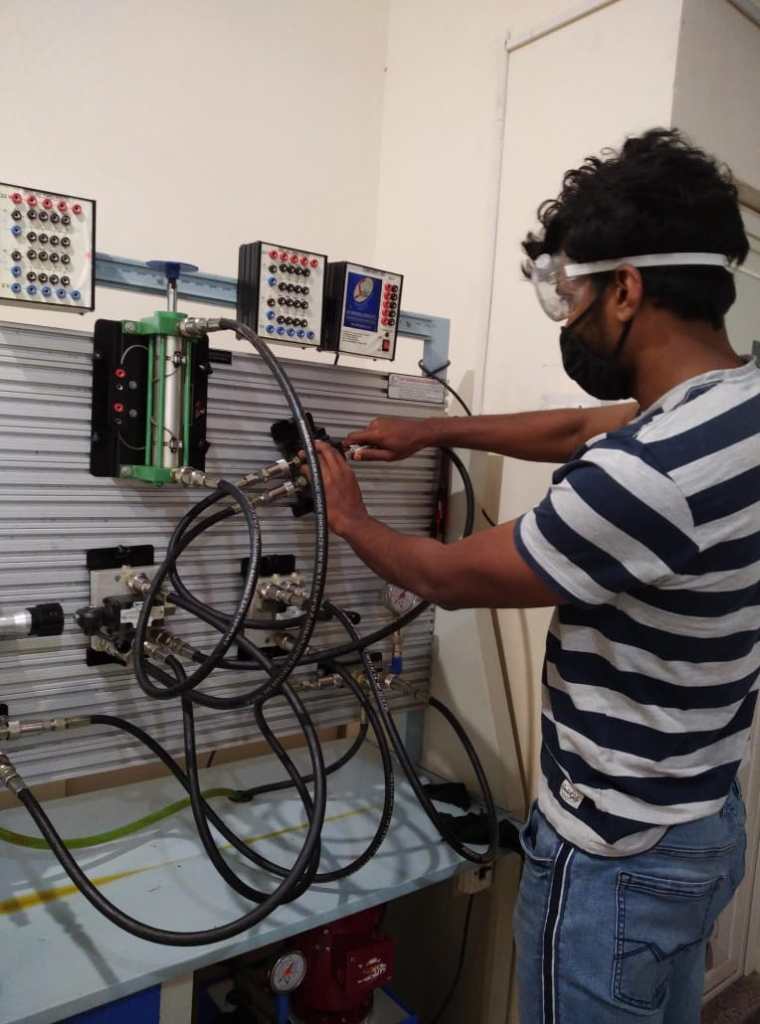
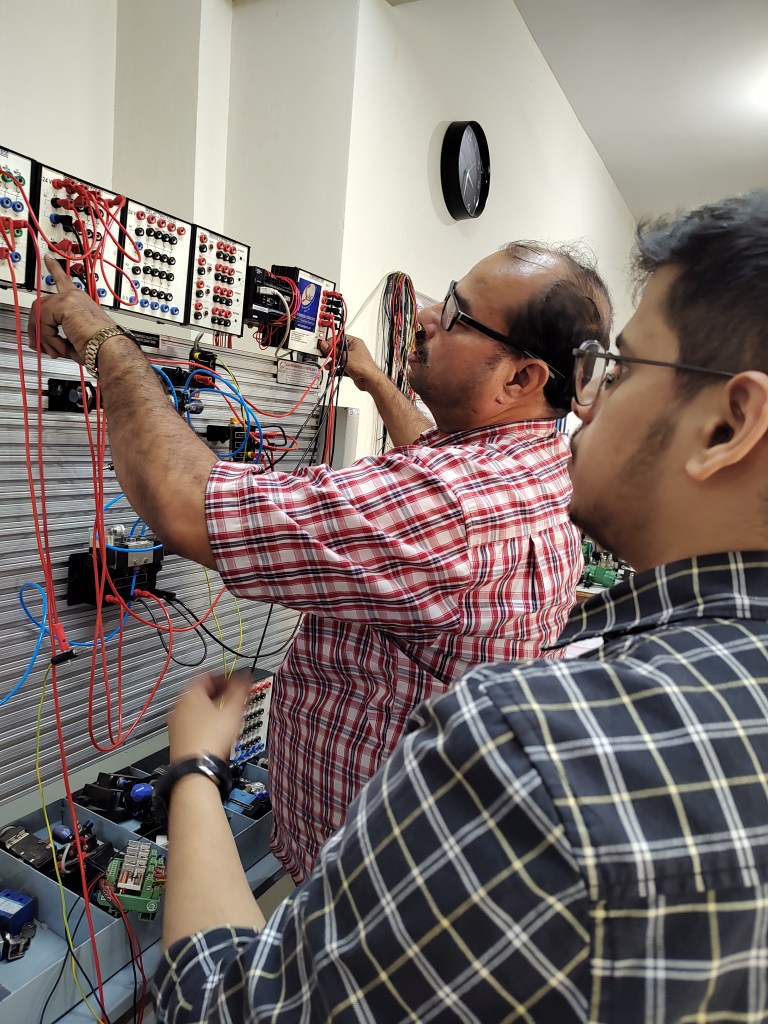
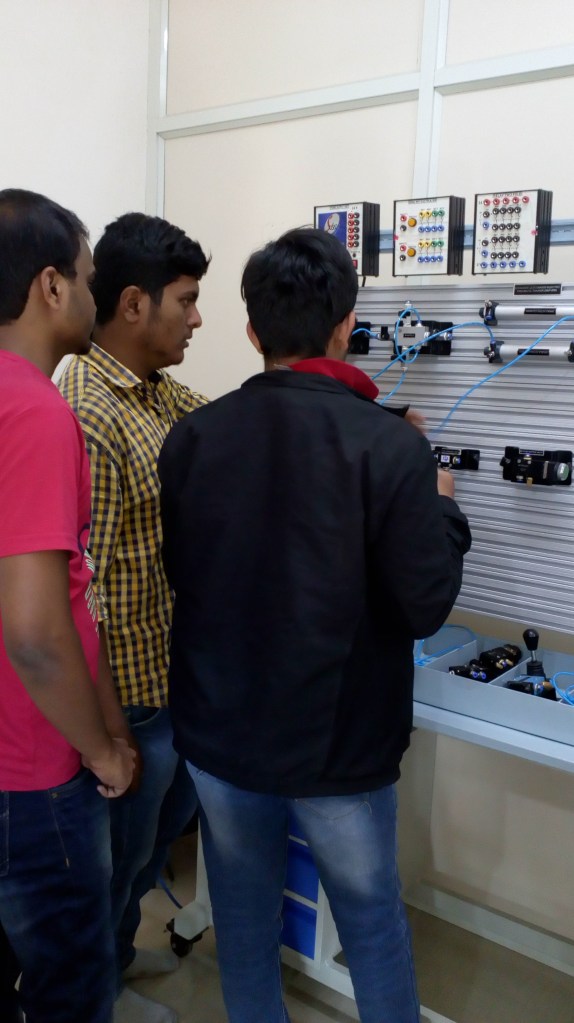
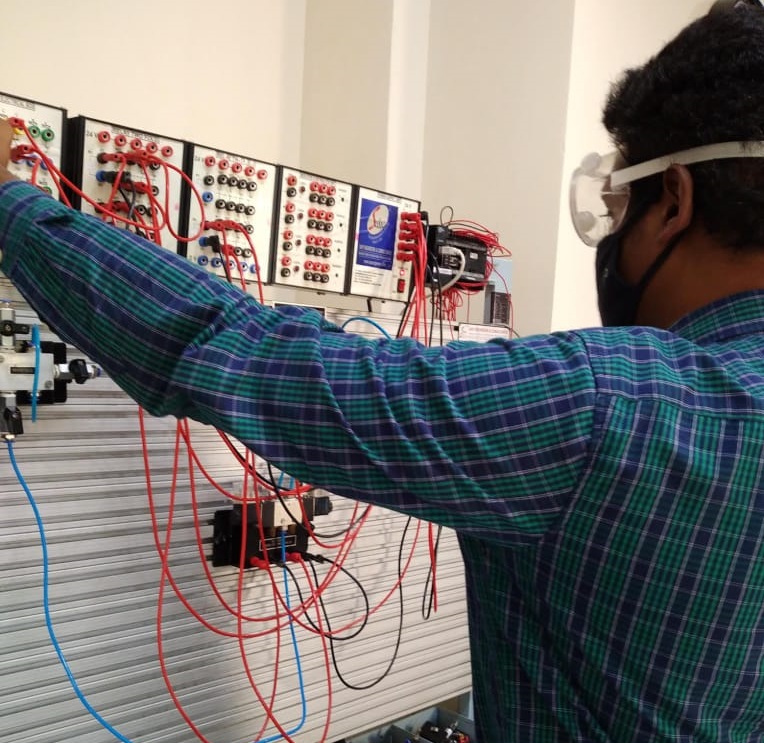
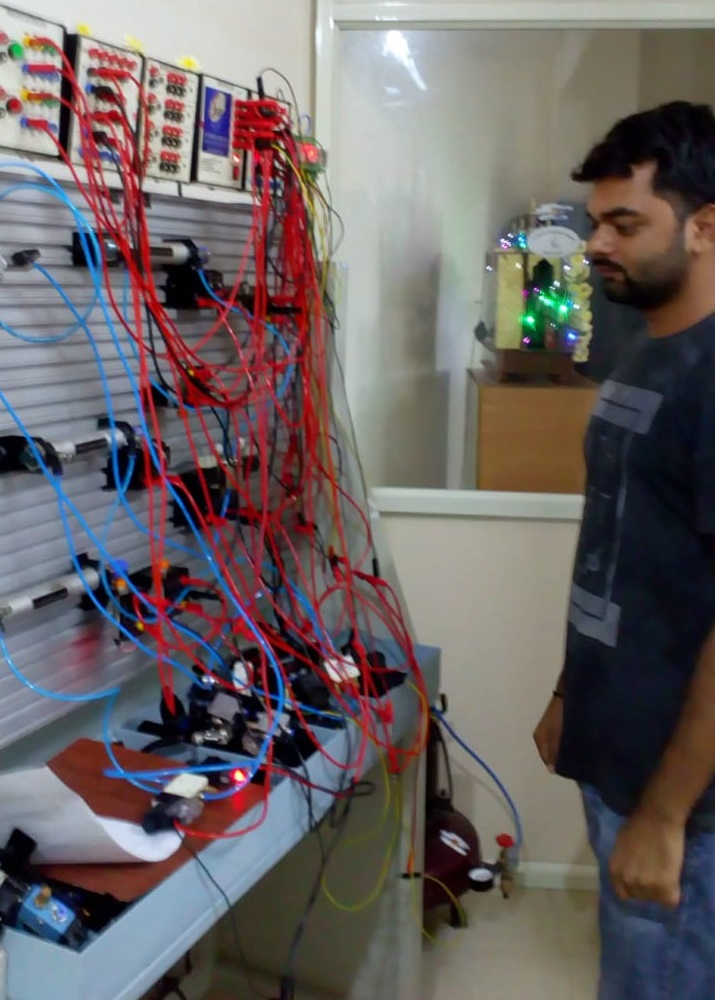
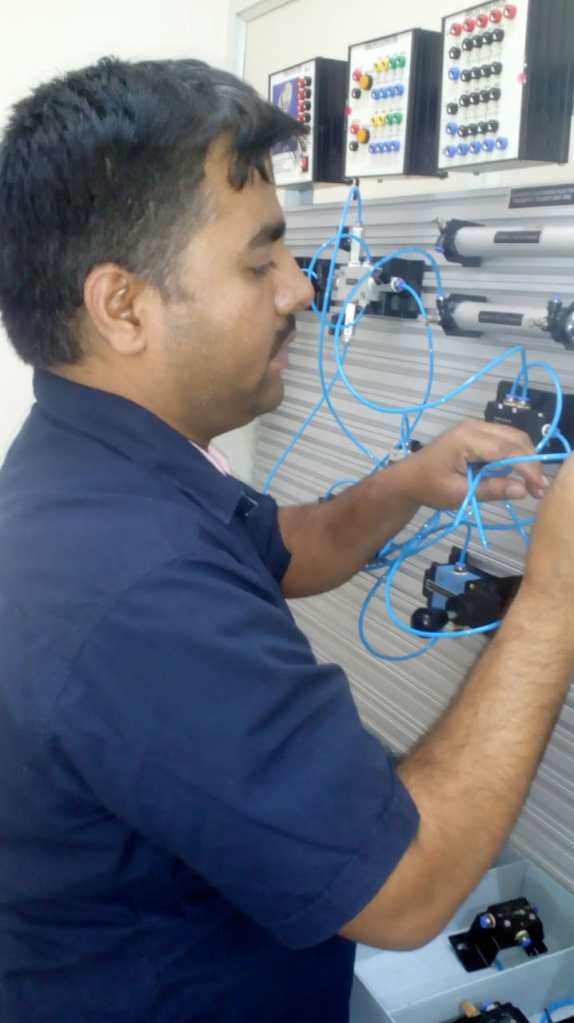
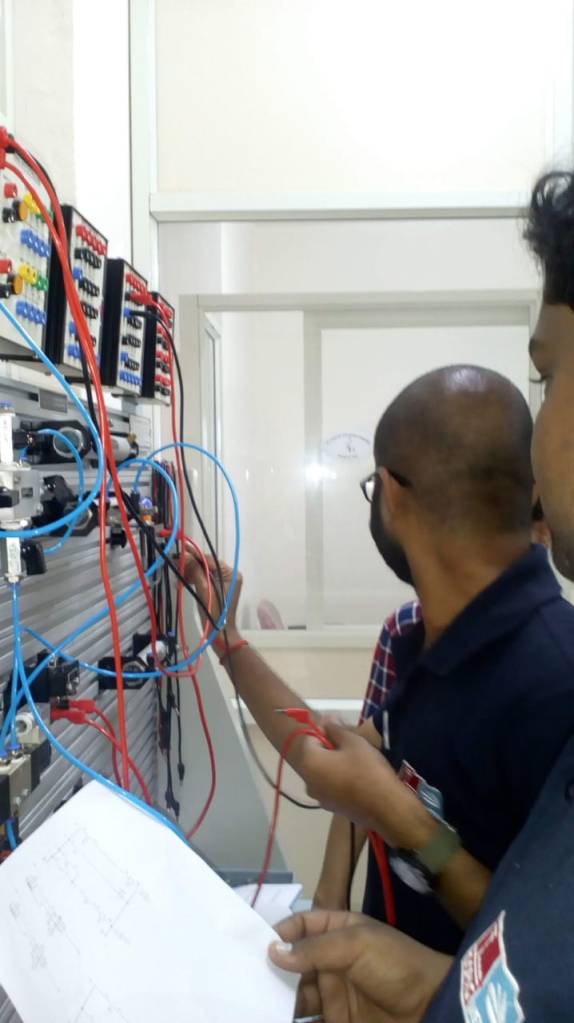
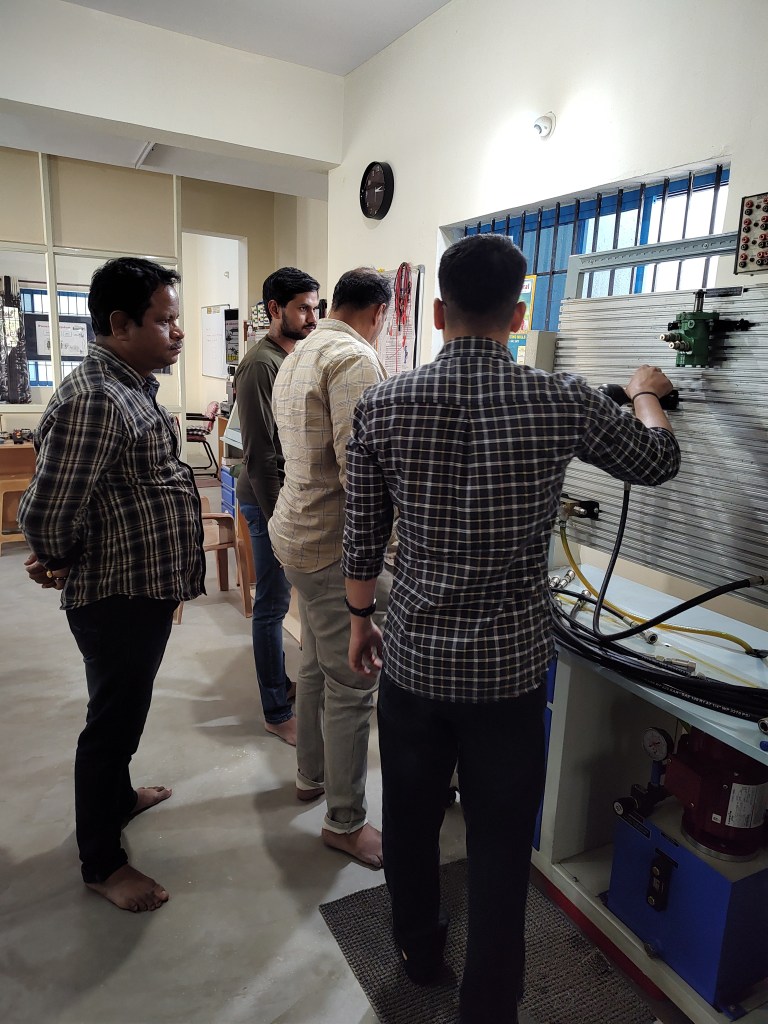
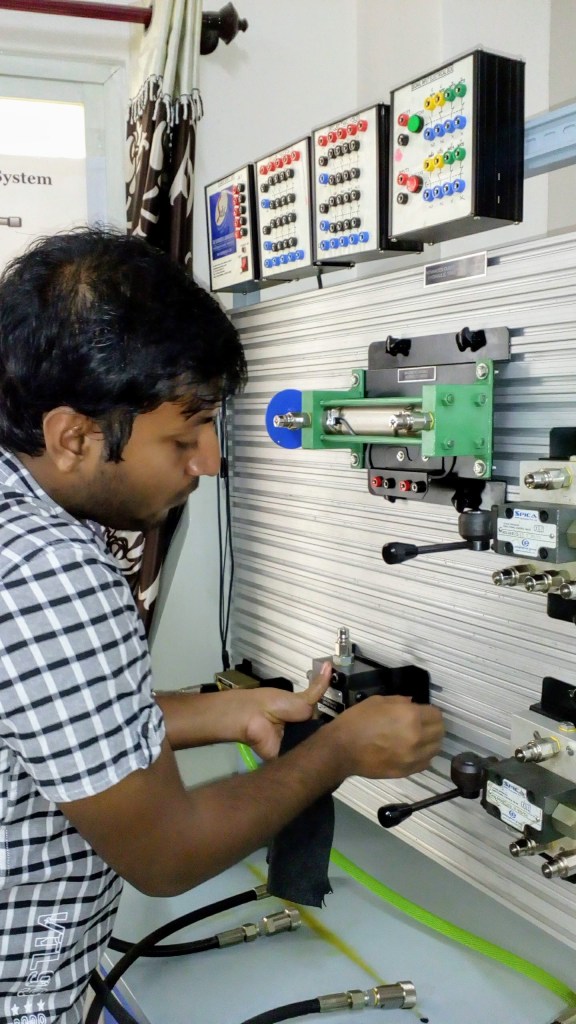
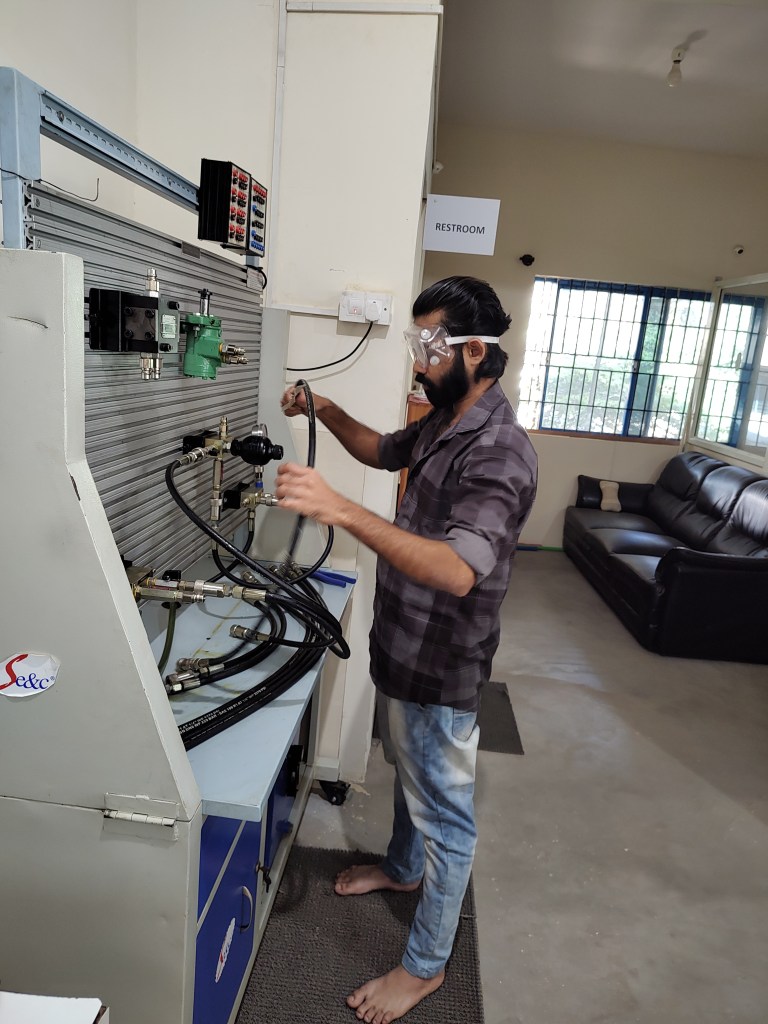
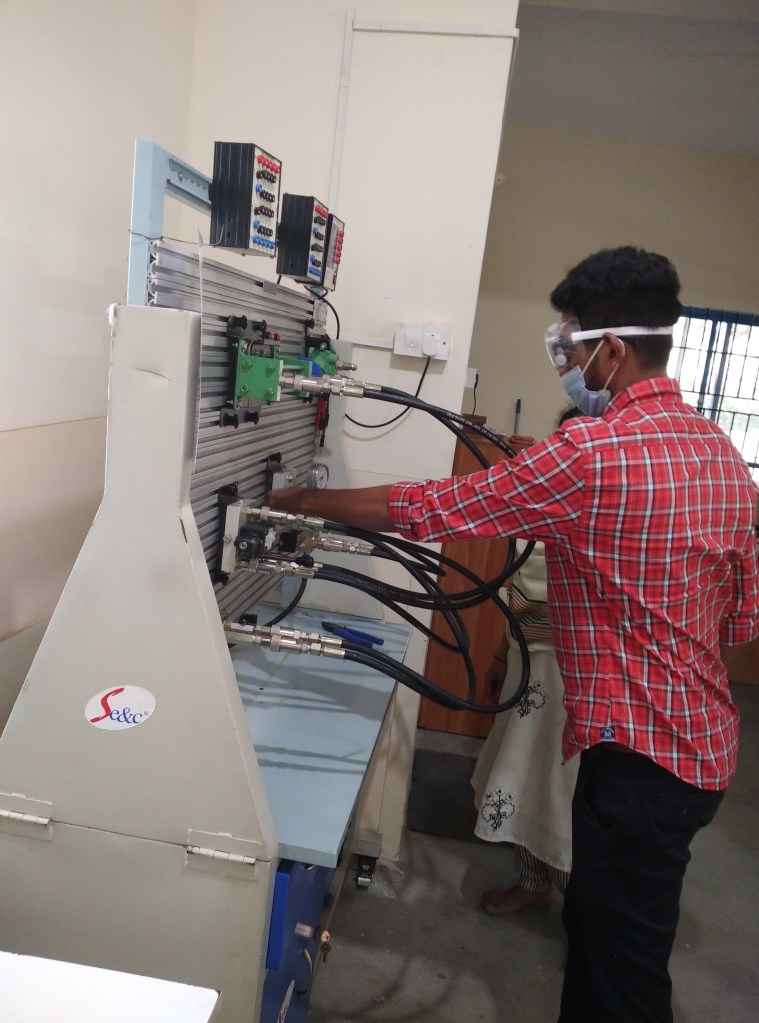
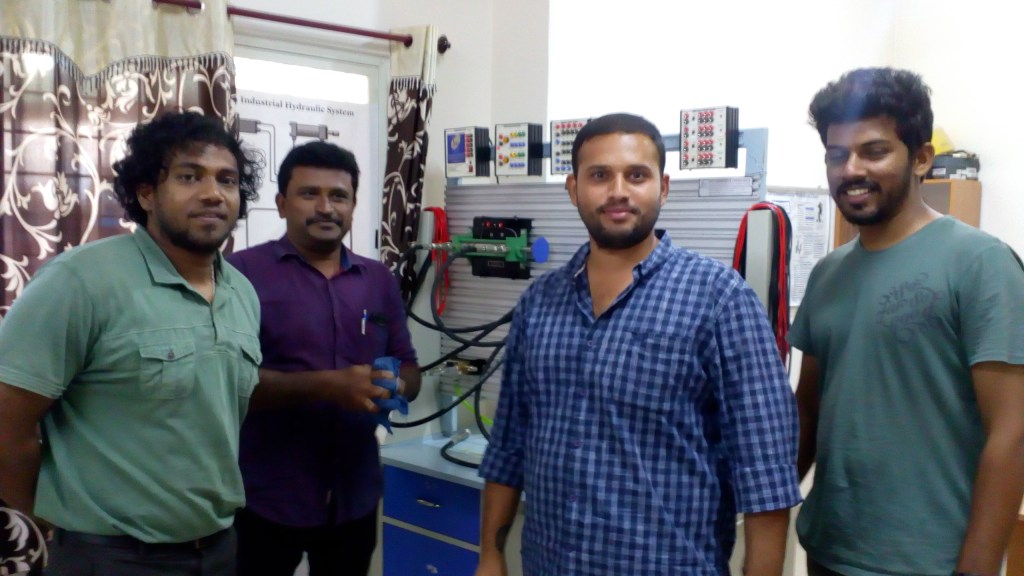
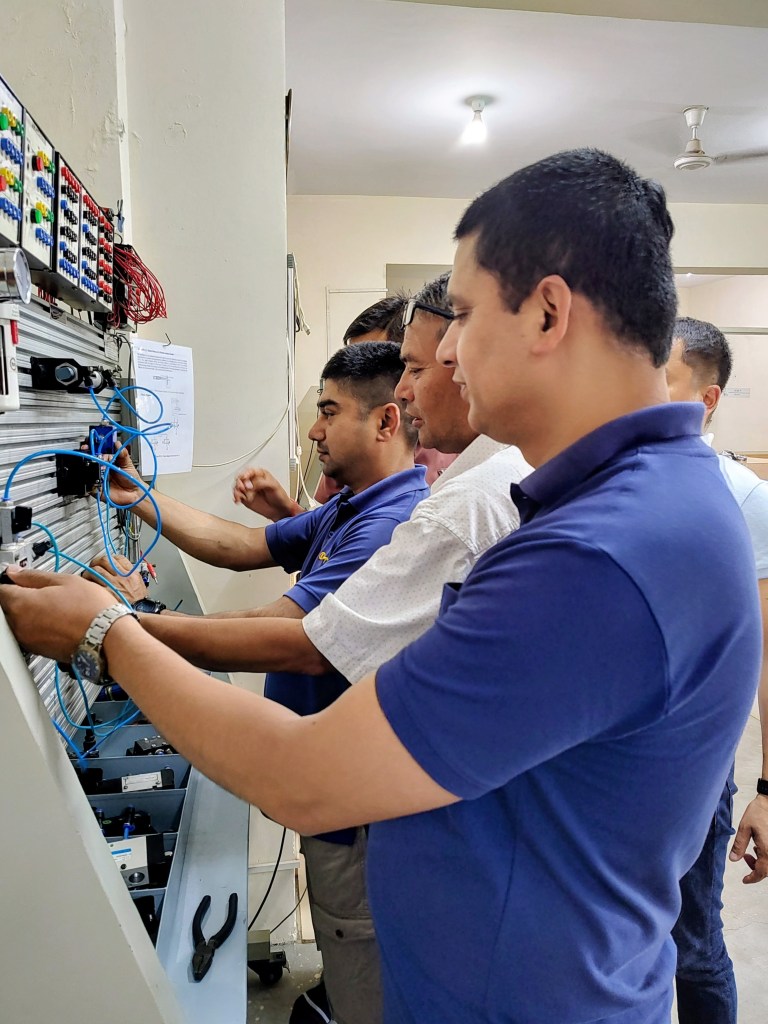
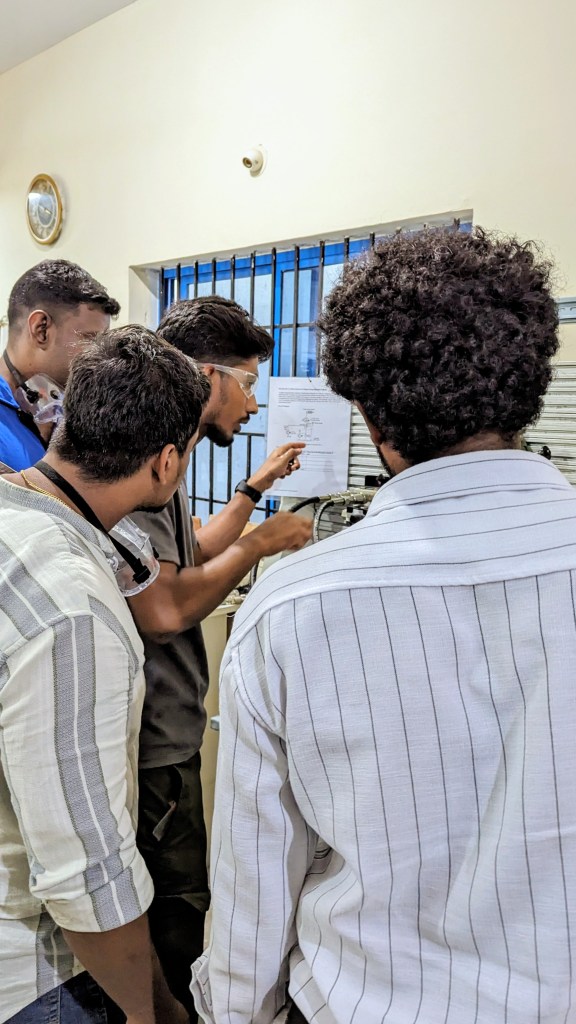
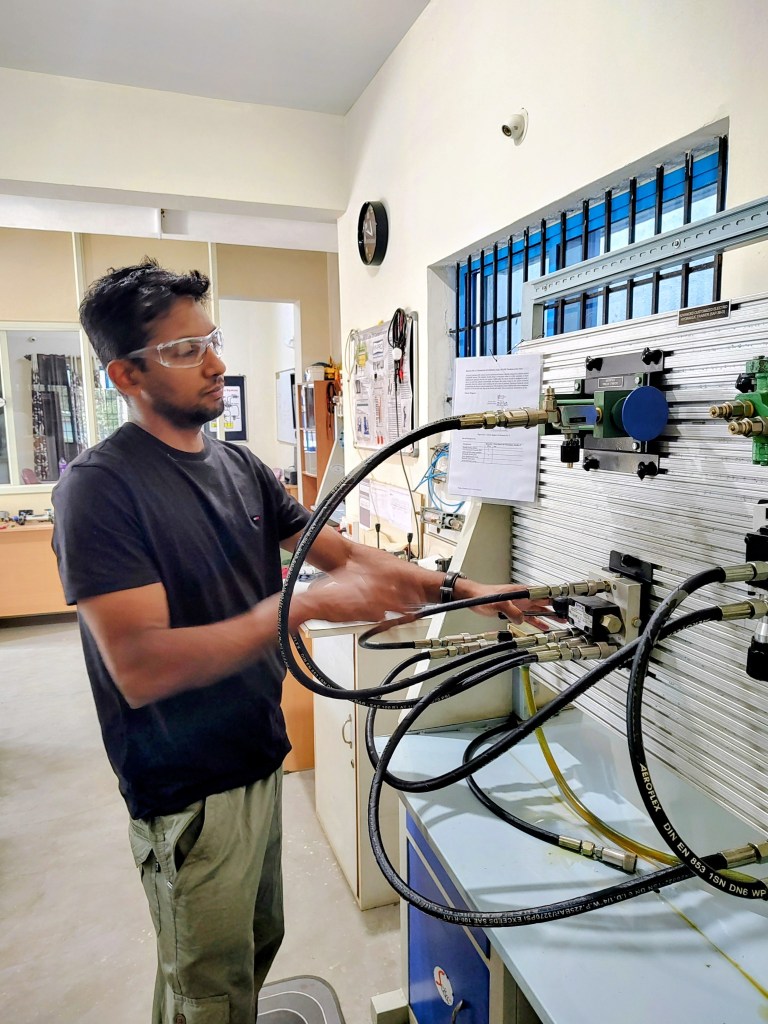
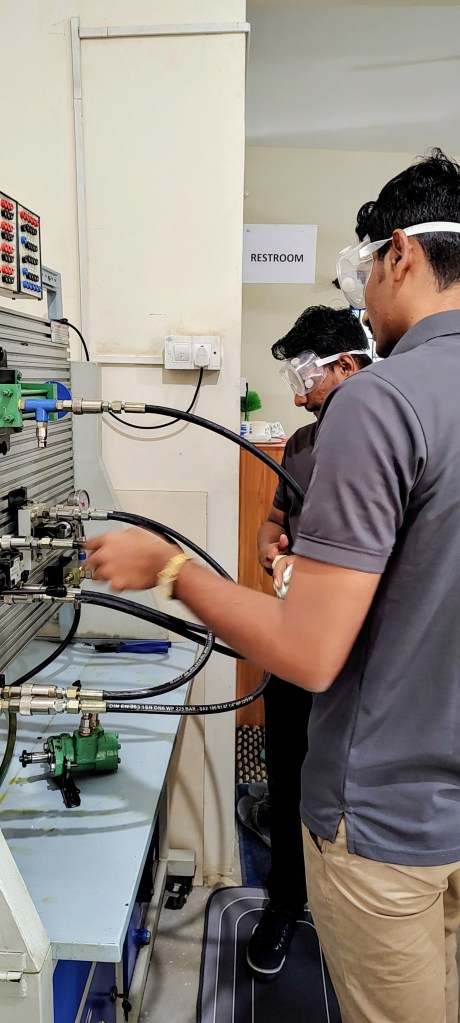
Fluidsys Training Centre provides comprehensive fluid power training, specializing in hydraulics and pneumatics with an emphasis on practical learning. The courses encompass safety protocols, system components, control circuits, system design, and maintenance & troubleshooting. The centre offers concept-oriented rather than product-oriented and practical-based short-term courses, internship programmes for engineering students, and customized on-site training for industries. If you are seeking dependable pneumatic and hydraulic training, Fluidsys training centre is the ideal choice.
Features
The training centre offers the following different modes of hydraulic and pneumatic training!!
Overseas Training
We undertake challenging training assignments for international organizations.
Tailor-made Courses
We can work together with an organization to create a course with content and duration that meet the needs of both parties.
Corporate Training
We specialise in delivering comprehensive corporate training for businesses.
Long-term and Short-term Courses
We offer a wide range of scheduled courses, both long-term and short-term, designed to meet the common needs of novice and experienced fluid power professionals.
On-site Training
We conduct on-site training customised to meet the specific needs of an organization.
Internship Programmes
We can arrange about 3-month or one-month internship programmes for the students of engineering colleges and polytechnics. They will be able to attend interviews and work in the industries with greater confidence.
Courses
Long-term Course
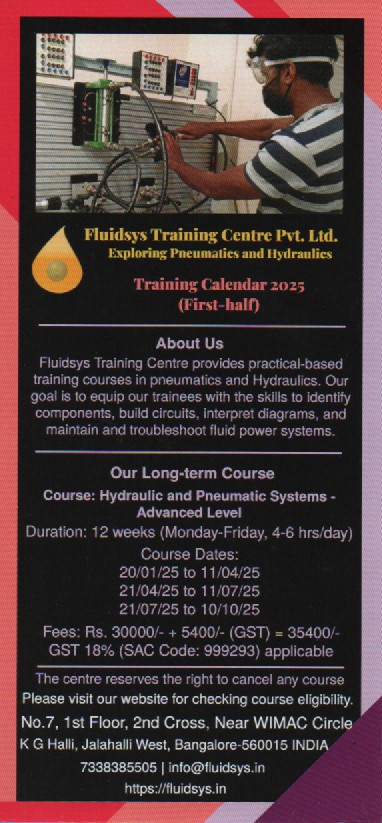
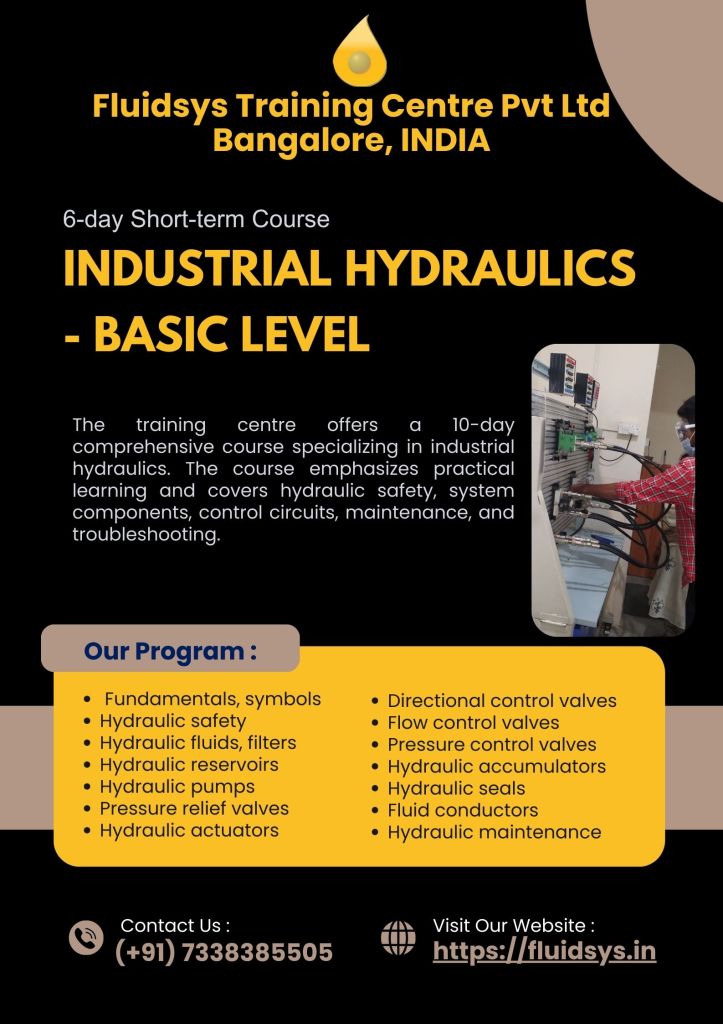
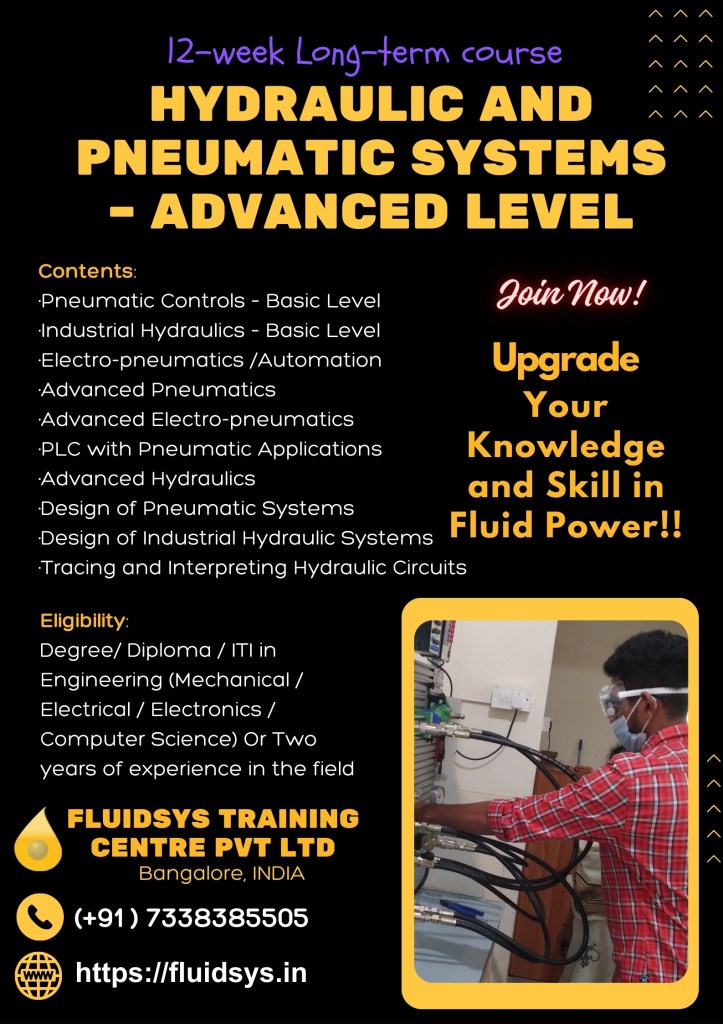
We introduce a practical-based long-term course on Hydraulics and Pneumatics.
Course: Hydraulics and Pneumatics – Advanced Level
Duration: 12 weeks (4 to 6 hours per day, Monday to Friday)
Course dates:
19-01-2026 to 10-04-2026
20-04-2026 to 10-07-2026
20-07-2026 to 09-10-2026
Eligibility: ITI /Diploma /Degree in Engineering (Mechanical /Electrical /Electronics /Computer Science) or Two years of experience in the field)
Next Courses: (1) 20/04/2026 to 25/04/2026 | (2) 18/05/2026 to 23/05/2026
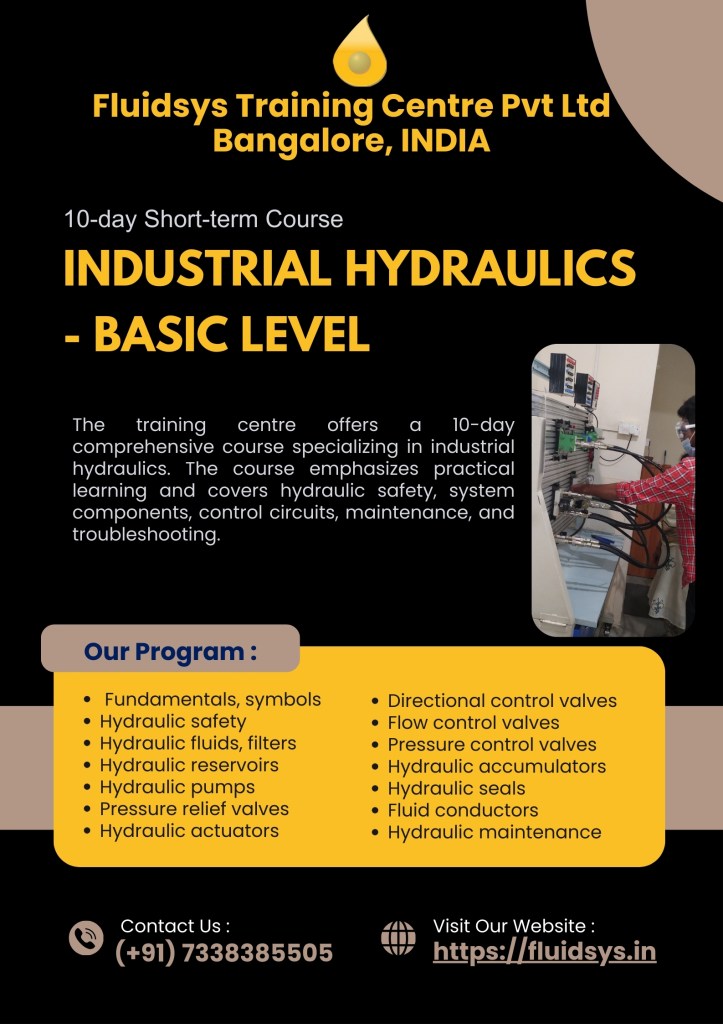
Brief Course Contents: Fundamentals, symbols, hydraulic fluids, filters, reservoirs, pumps, pressure relief valves, actuators (cylinders and hydraulic motors), directional control valves, flow control valves, pressure control valves, accumulators, seals, fluid conductors and fittings, maintenance and safety.
Note: This is a practical-based course
Short-term Course
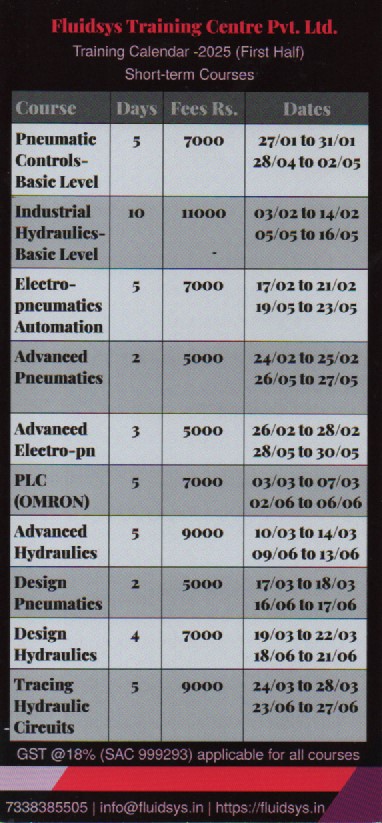
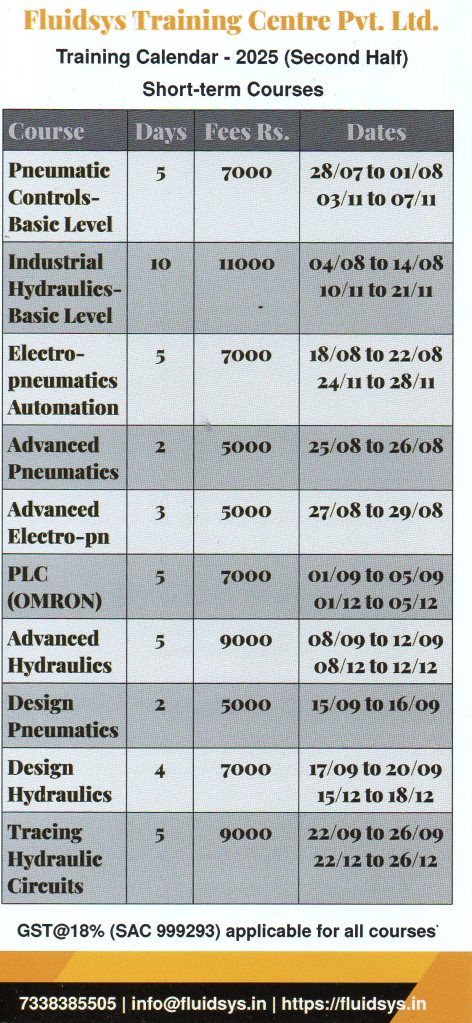
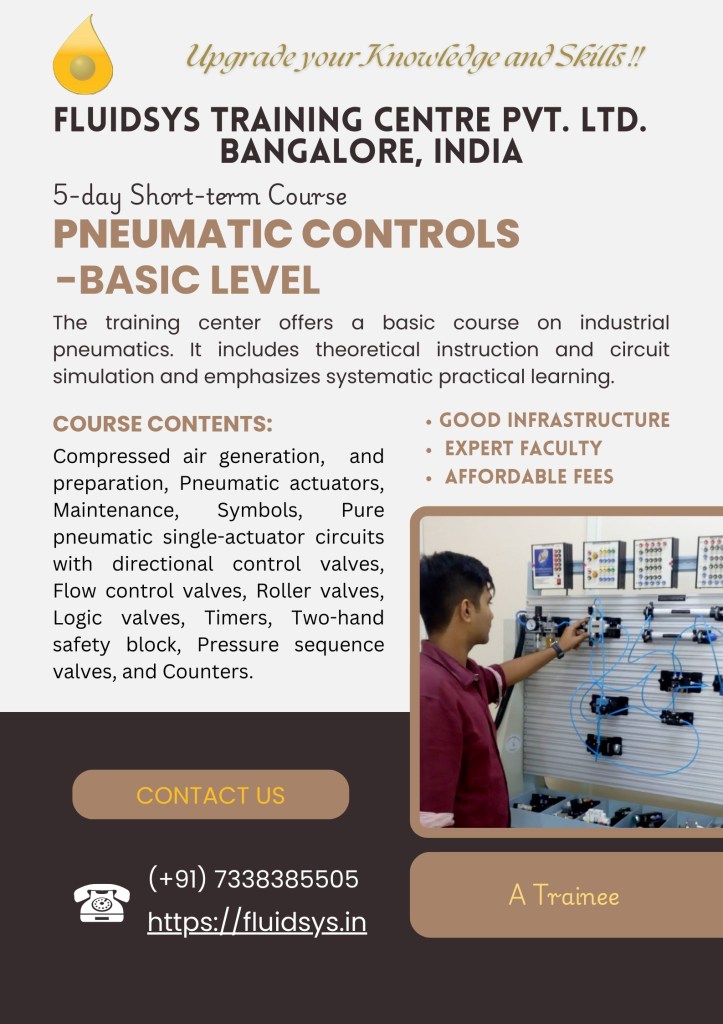
Pneumatic Controls – Basic Level
Duration: 5 days
Course Fee: Rs. 7000 + 1260 (GST 18%) = Rs. 8260
Next Course: Contact Us
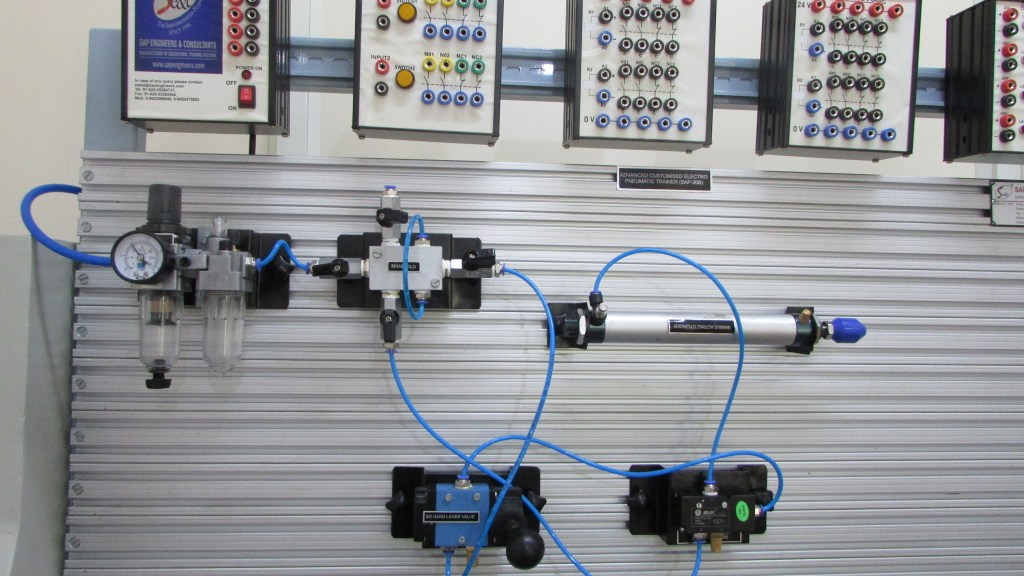
Course Contents: Compressed air generation and preparation, pneumatic actuators, maintenance, symbols, pure pneumatic single-actuator circuits with directional control valves, flow control valves, roller valves, concepts of automation, logic valves, timers, two-hand safety blocks, pressure sequence valves, and counters.
Course Contents: Multi-actuator pneumatic circuit development using Cascade method, Shift register method, and Stepper modules with software simulation.
Note: Limited practical
Short-term Course
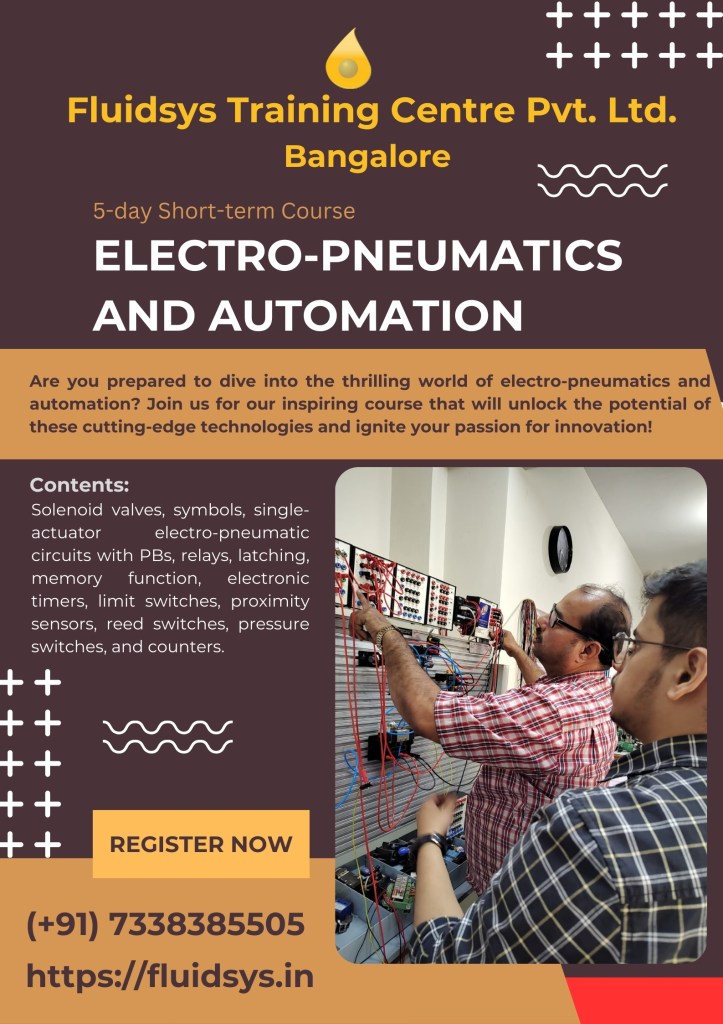
Advanced Electro-pneumatics
Duration: 3 days
Course Fee: Rs 5000 + 900 (GST 18%) = Rs. 5900
Next Course: Contact Us
Course Contents: Multiple-actuator electro-pneumatic circuit development using Cascade method and Shift register method with software simulation and practical.
Note: This is a practical-based course
Short-term Course
Programmable Logic Controllers (OMRON)
Duration: 5 days
Course Fee: Rs. 7000 + 1260 (GST 18%) = Rs. 8260
Next Course: Contact Us
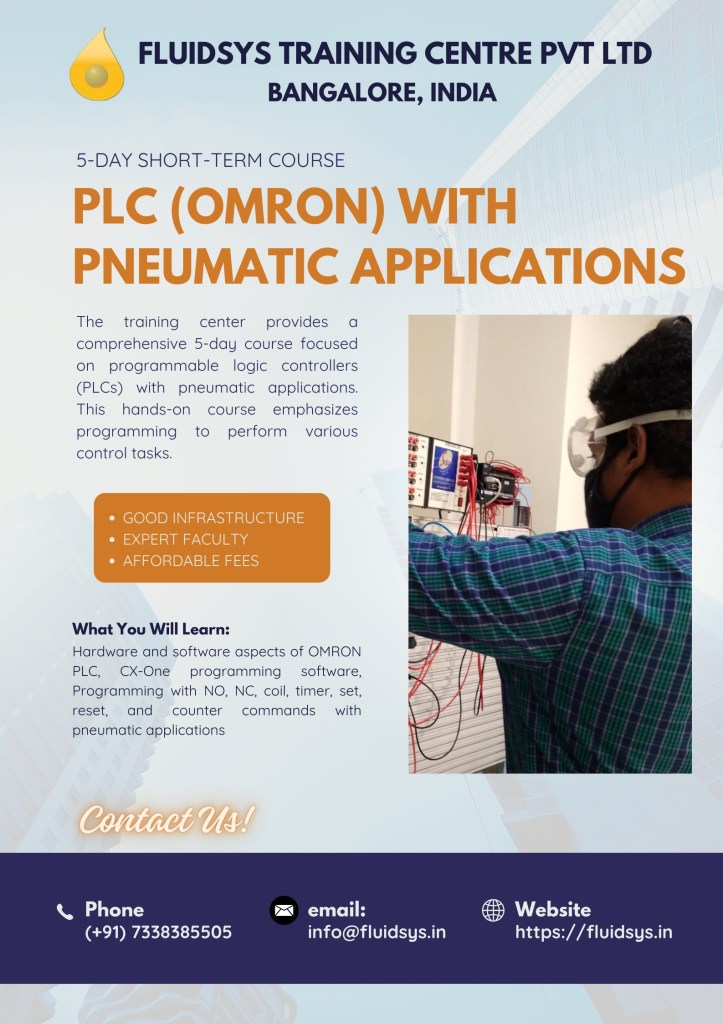
Course Contents: Hardware and software aspects of PLC, programming with NO, NC, coil, timer, set, reset, and counter commands with pneumatic (or hydraulic) and general applications.
Note: No practical facility, however, most of the circuits are simulated using a software package
Short-term Course
Design of Pneumatic Systems
Duration: 2 days
Course Fee: Rs 5000 + 900 (GST 18%) = Rs. 5900
Next Course: Contact Us
Course Contents: Sizing of pneumatic components including compressors, actuators, valves and conductors.
Note: Only theoretical inputs will be given.
Short-term Course
Design of Industrial Hydraulic Systems
Duration: 4 days
Course Fee: Rs. 7000 + 1260 (GST 18%) = Rs. 8260
Next Course: Contact Us
Course Contents: Sizing of hydraulic components including pumps, actuators, valves and conductors.
Note: Only theoretical inputs will be given.
Short-term Course
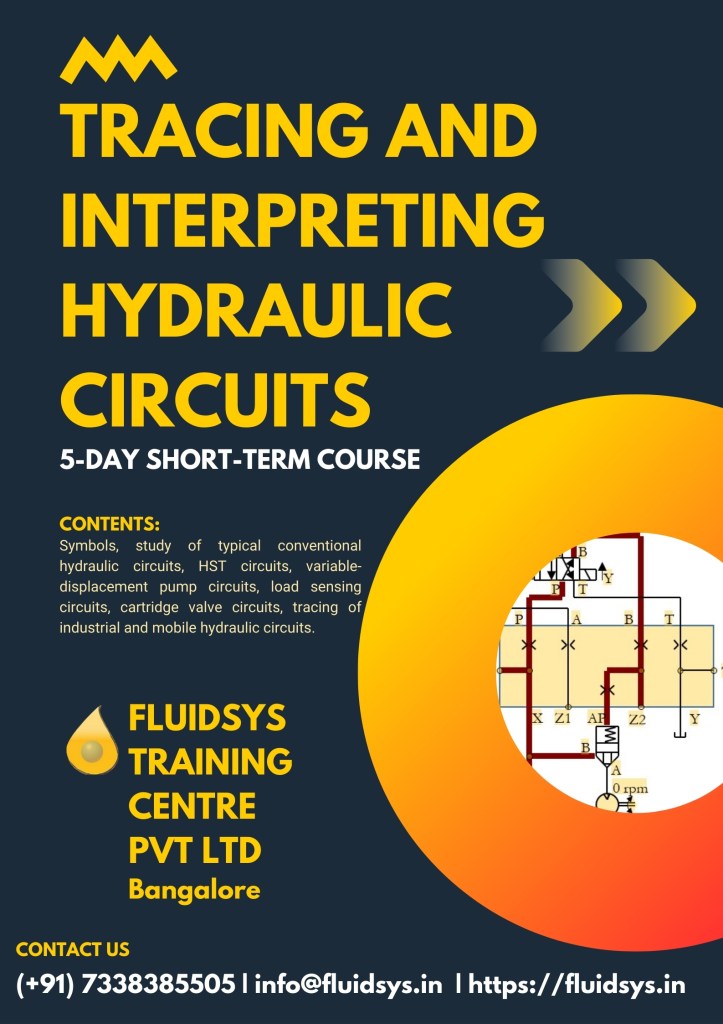
Tracing and Interpreting Hydraulic Circuits
Duration: 5 days
Course Fee: Rs. 9000 + 1620 (GST 18%) = Rs. 10620
Next Course: Contact Us
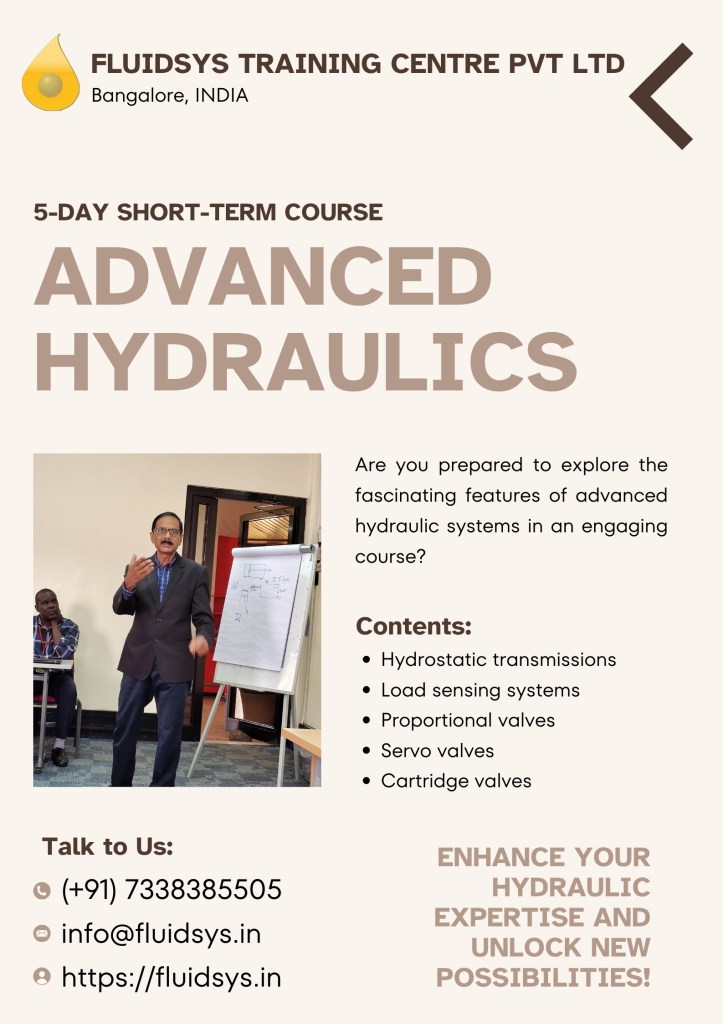
Course Contents: Symbols, study of typical conventional hydraulic circuits, HST circuits, variable-displacement pump circuits, load sensing circuits, cartridge valve circuits, tracing of industrial and mobile hydraulic circuits.
By the end of the course, the trainee should be able to identify hydraulic and pneumatic components and interpret the provided industrial hydraulic and pneumatic circuits.
Note:
GST 18% [SAC Code: 999293 (Commercial and Coaching Services) for all courses.
The textbook, workbook (if applicable), and other required educational resources are provided.
For an on-site or corporate course for less than 20 participants, the per-day training charge will be Rs 16000 + GST. The requesting company/organisation must also bear the accommodation, local conveyance, and the transportation charges of our faculty to and fro Bangalore, at actuals.
Please note that the training centre reserves the right to change the course dates or cancel any course without providing a reason.
Faculty
The training centre is responsible for identifying, creating, and providing opportunities for trainers’ professional development. This will enhance and build their capacity, skills, excellence, and professionalism, enabling them to contribute effectively to training programmes. Our training courses are handled by competent faculty.
Joji Parambath
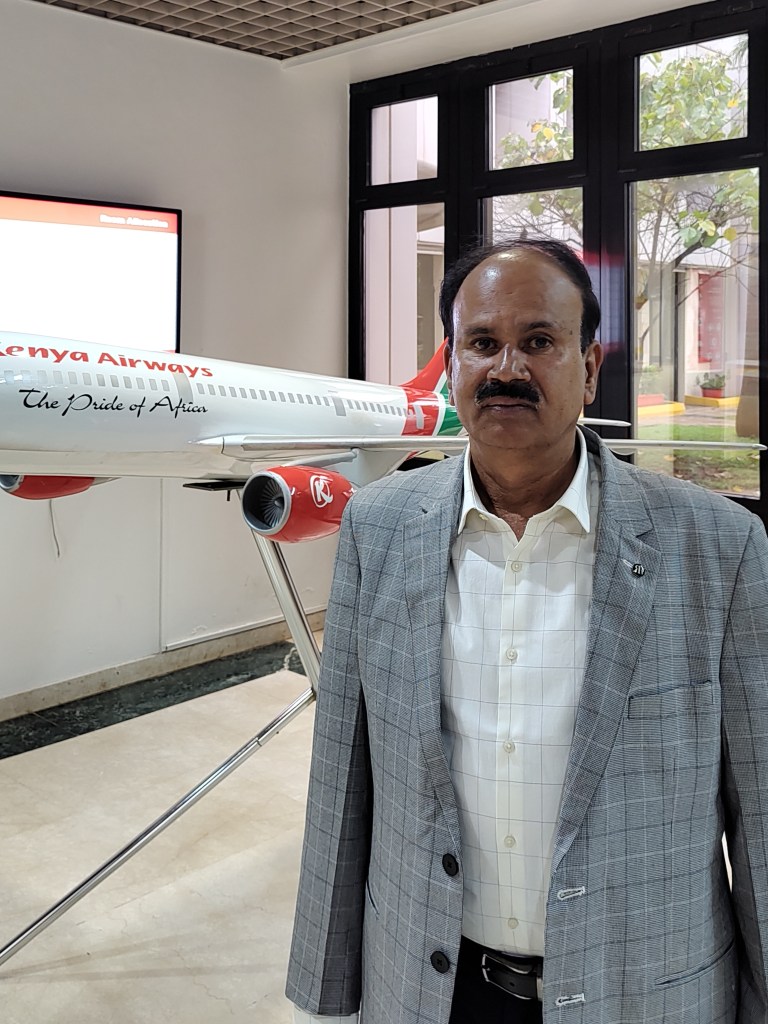
Joji Parambath is the founder and Director of Fluidsys Training Centre Private Limited, Bangalore, and conducts training courses in India and abroad. Earlier, he organised and conducted training programmes in Pneumatics and Hydraulic labs at Foremen Training Institute (Now National Skill Training Institute), Bangalore. He is an expert in pneumatics, hydraulics, electro-pneumatics/electro-hydraulics, and PLCs. Joji has authored 39 books on fluid power and regularly shares his technical knowledge and ideas on his blogs.
Ramakrishne Gowda
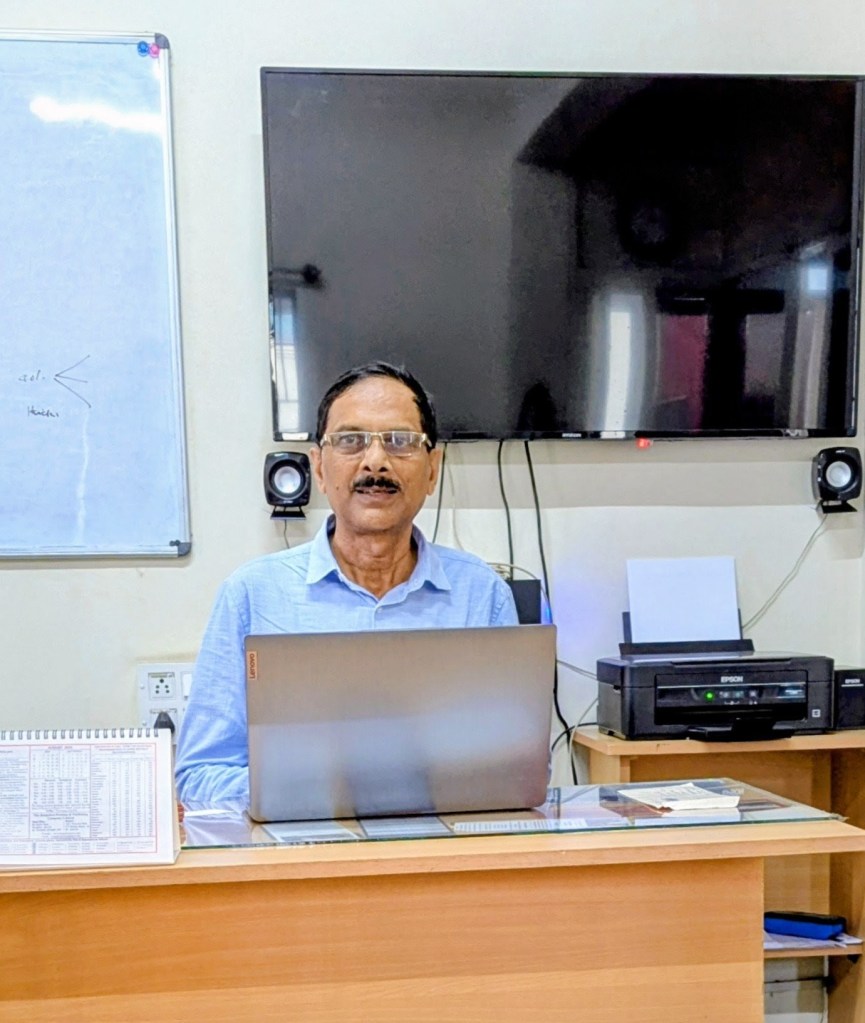
Ramakrishne Gowda is a senior faculty member at the Fluidsys Training Centre in Bangalore. He conducts training courses both within India and internationally. With over thirty years of experience in mechanical engineering, he has organised and conducted training programs at the National Skill Training Institute (NSTI) in Bangalore, Hyderabad, and Chennai. He is an expert in pneumatics, hydraulics, electro-pneumatics, and automobiles.
The operational environment in heavy industries, like steel mills, presents various hazards. These hazards can significantly affect worker’s safety and health. Recognizing the causes of these hazards and applying effective control measures are crucial for fostering a safe workplace. The following sections detail the significant causes of hazards within heavy industries along with their corresponding…
A hazard can potentially cause injury, illness, or even death to personnel in the workplace. It may also result in property damage. Various industrial hazards can threaten the physical well-being of employees. They also pose significant risks that may endanger both personnel and the environment. Each type of hazard presents unique challenges. These range from…
Preventing an LTI is always preferable to addressing the aftermath of an accident. Here are a few practical measures to prevent LTIs. Employee Training and Education: Regular workshops and safety certifications play a crucial role in reducing lost-time incidents (LTIs). They inform employees of best practices. These range from machine handling to emergency protocols. Businesses that…
Lost-time injuries (LTIs) affect not only the injured employee but also an organisation’s finances, health, operational efficiency, and culture. Financial Costs: Lost time injuries incur direct costs like medical bills, compensation claims, and insurance, which can add up quickly. Indirect costs also arise from productivity loss, training temporary replacements, and managing incidents. Operational Disruptions: Delays…
A lost time injury (LTI) occurs when an employee misses at least one workday due to a workplace incident. Preventing LTIs requires training in safety procedures and use of personal protective equipment. It also involves equipment usage and job-specific practices. Training includes safe lifting, hazard identification, risk assessment, emergency response, and near-miss reporting. Legal requirements…
Occupational safety and health are crucial for organizations as they enhance employee well-being. Occupational Health Management Occupational health management promotes and maintains all employee’s physical, mental, and social well-being. Stress, burnout, and fatigue often come from demanding work environments. These environments are marked by excessive hours and pressing deadlines. They also involve irregular shift patterns,…
A check valve is a simple device incorporating a spring-loaded poppet within a housing featuring two ports, A and B. This design enables easy flow from port A to port B. It effectively prevents any reverse flow from port B back to port A. An accompanying animation enhances understanding of how a check valve operates.…
A 4/2-DC valve can control a hydraulic motor for clockwise and anticlockwise operation. To achieve a smooth stop of the motor, a 4/3-DC float centre (or all open-centre) position valve can be used. If a float centre position valve is used, the circuit can support the independent control of multiple actuators connected to the system.…
The hydraulic circuit shows how two hydraulic cylinders work independently. It uses 4/3 All-closed-center position directional control valves as the final control elements. The power supply unit includes a fixed-displacement pump that delivers pressurized fluid to the circuit with constant displacement. A pressure relief valve (PRV) can be used to set the highest operating pressure…
Flared and flareless (compression) tube fittings are commonly used in hydraulic applications. Each type has its unique features. They help make tube end connections. As hydraulic systems evolved to accommodate higher pressures and increased power, steel tubes were adopted for interconnecting various components. Owing to the thin wall sections of these tubes, traditional threading techniques…





 Fluidsys Training Centre Private Limited