
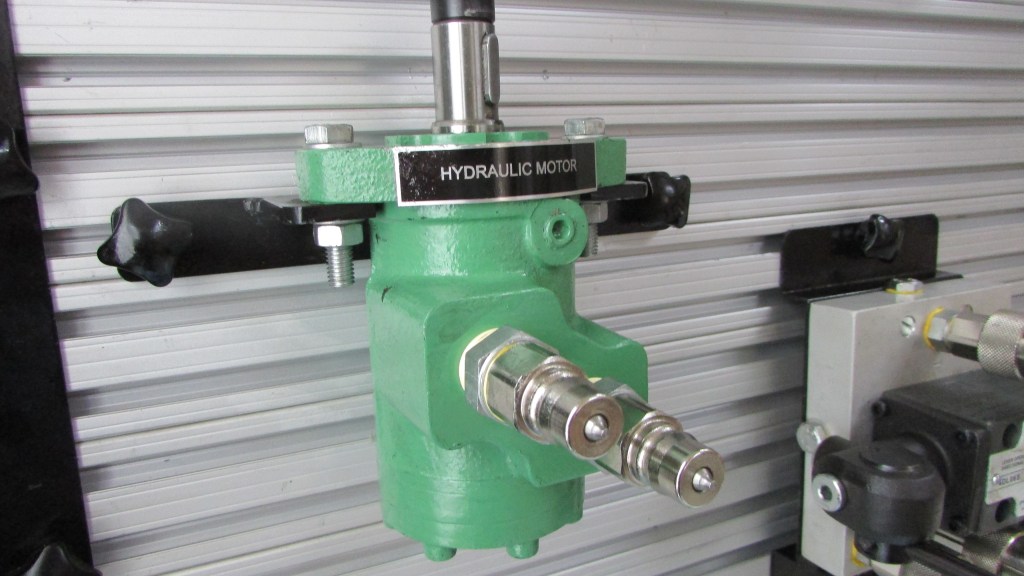
A 4/2-DC valve can control a hydraulic motor for clockwise and anticlockwise operation. To achieve a smooth stop of the motor, a 4/3-DC float centre (or all open-centre) position valve can be used. If a float centre position valve is used, the circuit can support the independent control of multiple actuators connected to the system.
The video demonstrates the circuit’s operation in its normal and actuated positions. In the left envelope position of the valve, the hydraulic motor runs in one direction (e.g., clockwise). In the right envelope position, the motor runs in the opposite direction.
If a closed-centre valve is used, and the valve is brought to its centre position to stop the motor, the motor tends to squeeze the trapped oil. This action develops high pressures in its working lines alternately due to the inertia of the running motor. In other words, the motor tends to jerk before coming to a stop. Therefore, relieving the fluid in the working lines to the tank is essential. This action ensures a soft stop of the motor. The float-centre position of the valve achieves this function.
By
Joji Parambath
Resource Person / Author
Note: This blog series featuring circuit simulation is for those seeking firsthand information on hydraulic circuits.
References:
1. Industrial Hydraulic Systems and Circuits -Basic Level (In the SI Units)
2. Industrial Hydraulics -Basic Level (In the English Units)

About the Author
Joji Parambath is an accomplished expert in Pneumatics, Hydraulics, and PLC with an extensive 25-year background in the field. Over the course of his career, he has trained many professionals from diverse industries, faculty members, and engineering students.
Joji is the primary faculty member at Fluidsys Training Centre in Bangalore, India. The centre offers comprehensive training in Pneumatics and Hydraulics. He has authored an impressive 39 books on the topic. These books are designed to convey knowledge in a simplistic and easy-to-understand manner.
For more details on hydraulic circuits, please visit https://jojibooks.com
For information on pneumatic and hydraulic training, please visit https://fluidsys.in
 Fluidsys Training Centre Private Limited
Leave a comment