
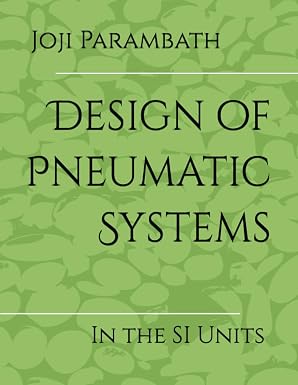
Learn how to design safe, efficient, and reliable pneumatic systems by selecting and sizing components to meet functional, performance, and safety requirements.

Course Information
✅Design of Pneumatic Systems
| Level | Advanced |
| Duration | 2 Days |
| Delivery Mode | Classroom / Corporate |
| Engineering Design Exercises | Multiple Industrial Design Problems |
| Next Batch | On request |
| Course Fee (Per trainee per course) | ₹5,000 + GST* (or “Contact for quotation”) |
| Seats Available | 08 |
| Certificate | Yes |
Note:
*GSTIN: 29AADCF0201A1ZJ
*SAC Code: 999293 (Commercial Training and Coaching Services)
Course Overview
Designing an effective pneumatic system requires more than selecting components. It involves understanding the application, defining system requirements, selecting and sizing components correctly, evaluating compressed air quality, optimizing energy efficiency, and integrating all elements into a reliable and safe engineering solution.
This course guides participants through the complete pneumatic system design process—from requirement analysis and component selection to circuit simulation, prototype evaluation, and system optimization.
The course emphasizes practical engineering decisions that improve system performance, reliability, maintainability, energy efficiency, and operational safety.
Typical Industrial Applications
Participants learn electro-pneumatic sequence control techniques widely used in:
- Automated assembly machines
- Packaging equipment
- Material handling systems
- Pick-and-place automation
- Transfer mechanisms
- Automatic drilling and machining fixtures
- Industrial automation systems
Learning Outcomes
After successfully completing this course, participants will be able to:
✔ Analyze application requirements and prepare system specifications.
✔ Select and size pneumatic components based on engineering calculations.
✔ Design compressed air generation and distribution systems.
✔ Evaluate compressed air quality requirements using ISO 8573-1.
✔ Design energy-efficient pneumatic systems.
✔ Develop complete pneumatic circuits using appropriate components.
✔ Prepare engineering documentation, including bills of materials and technical specifications.
✔ Optimize pneumatic system performance, reliability, and safety.
Who Should Attend
Anyone with a technical background is welcome to join our courses! That said, we especially encourage, professionals, engineers, faculty members, and engineering students to take full advantage of what we offer.
- Design Engineers
- Commissioning Engineers
- Service Engineers
- Faculty Members
- Engineering Students
- Diploma Holders
- Plant Managers
- Corporate Training Coordinators
Prerequisites
Knowledge of basic and advanced pneumatics is required. A technical background such as engineering, diploma, industrial maintenance, or related technical experience is beneficial.
Course Content
Module 1
Design considerations
Module 2
Fundamentals of Pneumatics
Module 3
Compressed Air Generation and Storage: Components and Compressor Specifications
Module 4
Compressed Air Quality as per ISO 8573-1
Module 5
Compressed Air Distribution Systems: Components and Technical Specifications
Module 6
Secondary Air Treatment – Components and technical specifications
Module 7
Pneumatic Actuators, Parameters and air consumption
Module 8
Air Consumption Chart for Industrial-type Tools
Module 9
Pneumatic Valves – Types and specifications
Module 10
Pneumatic Tools and Equipment – Types and specifications
Module 11
Energy Efficiency of Pneumatic Systems
Module 12
Pneumatic Design for Service Stations – Problems 1 to 2
Module 13
Pneumatic Design for Manufacturing Plants – Problems 3 to 6
Engineering Design Exercises
Participants learn:
Requirement Analysis
- Analyze pneumatic system requirements
- Prepare design specifications
Component Selection & Sizing
- Compressor sizing
- Air preparation equipment selection
- Actuator sizing
- Valve selection
- Conductor sizing
System Development
- Circuit simulation
- Bill of materials
- System integration
- Performance evaluation
Training Methodology
Through industry-oriented teaching, engineering calculations, design exercises, software simulation, and technical publications, we help participants convert engineering concepts into practical skills that can be confidently applied in industrial pneumatic system design.
Design Workflow
Application Requirements
↓
System Specifications
↓
Component Selection & Sizing
↓
Circuit Development
↓
Software Simulation
↓
Performance Evaluation
↓
Optimization
↓
Engineering Documentation
Typical Design Projects
Participants develop design solutions for applications such as:
- Pneumatic service stations
- Manufacturing plants
- Material handling systems
- Assembly workstations
- Pneumatic tooling systems
- Industrial automation equipment
Why Choose This Course?
🧮 Engineering Design Exercises
⚙ Real Industrial Components
📚 In-depth Course Material
📖 Structured Course Notes
👨🏫 Experienced Faculty
🏆 Certificate of Completion
Frequently Asked Questions
Do I need prior experience?
Yes. Knowledge of basic and advanced pneumatics is recommended.
Can organizations request customized training?
Yes. Training can be tailored to your equipment and operational requirements.
Are practical sessions included?
The course emphasizes engineering design exercises, software simulation, and practical design projects rather than conventional laboratory experiments.
Are course materials provided?
Yes. Comprehensive course notes and supporting learning materials are provided to all participants.
Will I receive a certificate?
Yes. Participants receive a certificate upon successful completion of the programme.
Course Enquiry & Registration


Contact Information
📍 Training Centre
Fluidsys Training Centre Pvt Ltd
No. 7, First Floor, Near WIMAC Circle
Kammagondanahalli (K G Halli)
Jalahalli West, Bangalore
Karnataka, India – 560015
📞 Phone
(+91) 7338385505
info@fluidsys.in
(+91) 7338385505
🕒 Office Hours
Monday to Saturday
9.00 am to 5.00 pm

